

Health & Mind
Are we addicted to our screens?

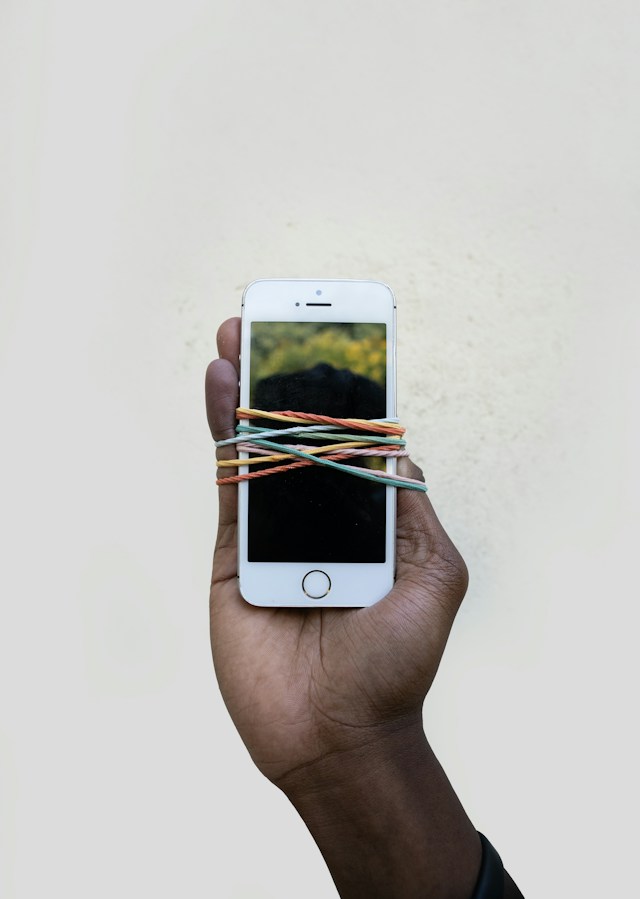
By Barsha Rawat
Student-Neuroscience & Research
Amity University Noida,
How often do you find yourself experiencing anxiety when you are not in proximity to your devices? Have you ever wondered why this happens?
I mean, has this just become second nature? Is it a lack of self-control for us to continually allow ourselves to be ensnared by something while still
feeling so fulfilled?
Everything we require, from our morning reminders and alarms to the time we go to sleep, is now only a click away thanks to technological advancements over the years. In this age of fads, rapid developments, and shifting geopolitics, it is important to stay informed.
Device usage has certainly become inevitable. It’s so fascinating to have access to all of it on a single screen, no? Well, as appealing as it sounds, our constant need for our phones has now become a topic of concern among mental health professionals, young adults, parents, and others.
(1) It often begins harmlessly—just checking one notification, replying to a message, one round of a video game, or scrolling through a single post. But before you realize it, you’re stuck in a loophole of endless doomscrolling and tapping, feeling the urge to check every notification the moment it appears on your screen, and compulsively playing video games to escape. Each time you engage, your brain encodes that feeling, that sudden craving.
It is a silent trap that separates a clinical problem from a habit. “Addiction” is the term for this long-term, unhealthy fixation or prolonged, repetitive engagement with something that alters behaviour and may necessitate long-term treatment.
Especially in young adults, the addictive tendencies towards screens have increased rapidly despite the negative consequences, which cause several compromising aspects in an individual, like withdrawal, loss of other interests, adverse mood swings, impaired control, disrupted appetite, sleep schedule, neglected appearance, and strain in relationships. (2,3)
How does screen keep us hooked?
As everyone knows, the most well-known neurotransmitter linked to addiction is dopamine. It is mostly produced by the midbrain’s Ventral Tegmental Area (VTA) and Substantia Nigra. (4) Dopamine’s main functions include learning and motivation, as well as attention, pain processing, movement, and mood—most notably, producing a strong sense of reward.
This cycle of unpredictable outcomes intensifies because you never know what you will get from each notification, video game, or the next post or reel on your screen. Dopamine in trace amounts; anticipation causes the greatest release of dopamine, and each time this happens, the pathway strengthens.
Each time you experience positive feedback, your brain releases dopamine, which rewires your neural networks, leading to reinforcement learning patterns. These repetitive patterns are responsible for creating behavioural changes, thus making it difficult to resist the constant compulsive and automatic urge to return to our screens, locking us in a constant dopamine loop that creates inveterate patterns even when you know the consequences would be negative. (5,6)
The FOMO (Fear of Missing Out) is another behavioral/psychological phenomenon, a tendency to experience extreme anxiety caused by feeling left out or, say, missing out on the reward. The extreme case of FOMO causes an individual to be more reactive towards the ‘buzz’ of the notification due to the constant trigger updates and access to information that these platforms provide about an individual’s life and more. (7)
The numerous triggers and principles, and the reinforcement mechanism, foster maladaptive behaviour in an individual which persistently keeps us ‘hooked’ to these screens. (8)
Additionally, screen addiction raises several health issues, including sleep deprivation, a short attention span, an increased risk of anxiety and depression, and potential early cognitive decline.
A reasonable amount of exposure to electronic media can help a developing child improve in creative thinking, learning abilities, and skills, but excessive use of screen media can lead to poor sleep cycles, poorer academic performance, and exposure to graphic and fast-paced content that triggers dopamine and reward pathways, can cause fluctuated attention spans and hyperactivity, which eventually is associated with ADHD, and antisocial tendencies. (2,9)
Can We Break Out of This?
Everything has a pessimistic as well as an optimistic outcome. Having access to digital media does harm, but it can be beneficial if used wisely—it’s not about running away from technology but bringing back self-discipline and focus and reclaiming the script of your life.
- The most common way to get addicted to a device is because of the automatic habit of triggers. We can start from there and disable the notifications of the applications that do not serve an important purpose at all.
- Try not to use any digital screen for at least an hour before you go to bed.
- Vibrant colours and flashing lights are another way to trigger your dopamine cravings; instead, neutralise the screen by going into grayscale mode. This gradually allows you to strip off the thrill since all the colours are gone, and the endless scrolling gradually fades.
- Concentrate on improving your own life instead of what’s happening in other people’s lives on a tiny screen. Begin the digital detox, journal, crochet, and speak with your loved ones, friends, and acquaintances.
- Keep a journal, crochet, work out physically (yoga, pilates, jogging, walking, or going to the gym), learn an instrument, write, and blog. Take actions that give you a sense of visibility.
- Things take time, and every step feels heavy in the beginning, but it gets better with time once you start to gather up the courage to focus on your well-being.
- Try going zero screen hours– an hour in the morning and 1 hour at night, do real-time focus-demanding activities.
- Normalise FOMO: Yes, normalise it. Not everything you see on the internet is true, and not everything the other person is doing or promoting on the internet is for everyone! You are just right where you need to be. Every other day, every other media you consume, especially on social platforms, comes with new products, opinions, and a newly manufactured insecurity. In this hush-hush, we’ve forgotten what it is to be like when you are authentic, your own self, do mistakes. Instead of running after the trends, try making ‘being your own real self’ a trend.
- Schools and institutions should integrate digital literacy lessons in their curriculum along with established counsellor support, active infrastructure, screen-free spaces, etc.
It’s not as hard to break out of this loop if the steps are taken at the right time.
The multi-billion-dollar companies are the only ones profiting from the trap that they’ve set up to feed off of your attention, dependency, time, and focus by carefully designing the products to be magnetic in the tiny glass brick that keeps you amused, and let’s face it—right now, you are the NPC feeding into this passive heist. We are far more than just throwing away our youth for a glowing rectangular screen. Address it, acknowledge it, work on it and pass it on with a unified approach.
We are the generation that grew up with exposure to screens, and given current advancements, it is difficult to completely abandon technology; however, to safeguard our future and present, we need to foster a balanced relationship with it.
References:
1.Safe & Sound Blog—The Digital Safety Alliance [Internet]. [cited 2026 Jun 9]. Available from: https://www.nicklauschildrens.org/campaigns/safesound/blog/why-are-kids-so-addicted-to-screens
2. Liu J, Riesch S, Tien J, Lipman T, Pinto-Martin J, O’Sullivan A. Screen media overuse and associated physical, cognitive, and emotional/behavioral outcomes in children and adolescents: An integrative review. J Pediatr Health Care. 2022 Mar;36(2):99–109.
3. Muppalla SK, Vuppalapati S, Reddy Pulliahgaru A, Sreenivasulu H. Effects of excessive screen time on child development: An updated review and strategies for management. Cureus. 2023 Jun;15(6):e40608.
4. Watson S. Harvard Health. 2024 [cited 2026 Jun 9]. Dopamine: The pathway to pleasure. Available from: https://share.google/0hEFqOAzjyWse3HX7
5. Sharpe BT, Spooner RA. Dopamine-scrolling: a modern public health challenge requiring urgent attention. Perspect Public Health. 2025 Jul;145(4):190–1.
6. Linnet J. The anticipatory dopamine response in addiction: A common neurobiological underpinning of gambling disorder and substance use disorder? Prog Neuropsychopharmacol Biol Psychiatry. 2020 Mar 2;98(109802):109802.
7. De Caro EF, Pagano LP, Garofalo C, Mazzeschi C, Brugnera A, Donisi V, et al. Fear of missing out in adolescence: The role of emotion regulation and self-esteem in a two-wave study. J Affect Disord. 2026 Jul 15;405(121622):121622.
8. Brown VM, Price R, Dombrovski AY. Anxiety as a disorder of uncertainty: implications for understanding maladaptive anxiety, anxious avoidance, and exposure therapy. Cogn Affect Behav Neurosci. 2023 Jun;23(3):844–68.
9. Kerai S, Almas A, Guhn M, Forer B, Oberle E. Screen time and developmental health: results from an early childhood study in Canada. BMC Public Health. 2022 Feb 15;22(1):310.
Edited by: Goldie Kasturia
Founder – Takhte Writers and Publishers
Trustee – Ojass Takhte Trust
PHOTO COURTESY – Dwayne-joe-unsplash






Nancy Lohia
Student-Psychology
The NorthCap University
Many people believe that their identities or the identities of those in their lives are linked to their social media profiles. We communicate with friends, family, and other acquaintances via social media. We get a glimpse into someone’s life when they share an image, comment, or video, and they frequently share an emotional experience. As a result, when we connect with someone, an emotional component may develop over time due to our ongoing interactions with them through various social media communication channels.
Social media’s rise has made it easier for people to connect. Social media now allows people worldwide to interact and communicate in various ways. Social media has made it possible for users to share a variety of content concerning their passions, such as images, videos, articles, and connections to several websites.
However, the popularity of social media has also raised anxiety levels, especially among teenagers and young adults, which has resulted in the emergence and growth of FOMO, or the fear of missing out. When discussing the effects of social media on mental health and how FOMO has impacted people, especially young adults, it is clear that the rise and prevalence of FOMO among the youth have become increasingly significant. To successfully navigate today’s world of several social media platforms, it is imperative to find a means for people to shift their ideas of FOMO to JOMO [The Joy of Missing Out].
Comprehending FOMO
FOMO, or fear of missing out, is a term used to describe the uneasy sense that you might be missing out on something amazing that others are enjoying. 1 According to Przybylski and his colleagues, FOMO is the ubiquitous need to constantly be aware of what other people are doing. 1 From a psychological perspective, FOMO arises when basic human needs like self-worth, belongingness, and social connection are either unmet or in danger. 1,2 Due to the constant barrage of information about other people’s lives (visually displayed images) on social media, an individual will grow increasingly concerned about whether or not these basic needs are met and whether or not there is evidence of someone’s authentic self (trials and disappointments) during their fun-filled moments.
This will make people think that others are living better lives than they are, which will lower one’s sense of self-worth. of insufficiency, or omitted (where there is no real proof).
Social media’s role in creating FOMO
Creators designed social media sites like Facebook, Instagram, Twitter, and TikTok to capture and maintain our interest. Notifications, likes, comments, stories, and algorithm-generated content motivate us to interact with them regularly. 2.5 These features can facilitate communication between users, but they can also exacerbate emotions of social comparison and FOMO. 2,5
Comparing one’s daily life to the carefully manicured highlight reel of others is the primary source of FOMO. 2, 3 The majority of social media users share their triumphs, festivities, or memorable experiences, but many also choose not to share anything about their setbacks, hardships, or ordinary aspects of their lives. People who see these articles may thereby create an unrealistic standard or expectation by comparing their entire life to someone else’s chosen highlights.
The constant availability of information is another major factor in FOMO.
For fear of missing a crucial update, discussion, or event, many people feel compelled to check their phones or other gadgets several times during the day. Over time, this behaviour may cause a person to become dependent on social media, making it challenging for them to stop using it completely—even if doing so would improve their mental health. 2,4
FOMO’s psychological impact
Emotional distress and anxiety
Many students have been reported to experience anxiety as a result of FOMO.2,3 People who worry that they won’t get invited to important events (like parties) or social gatherings (like going out with friends) may have anxiety and restlessness nearly all the time. Because of this, these children may feel that they have to keep up with or be aware of everything that is going on with their peers at all times, which wears them out emotionally and makes them anxious all the time.2,3
Reduced Self- Respect
As previously said, students’ self-esteem may deteriorate as a result of continuing to compare themselves to people they perceive to be more attractive, successful, or socially connected on social media.2,3 They may disregard their own achievements and strengths if they frequently compare themselves to these others. Students may have emotions of inadequacy and/or self-doubt if they constantly compare themselves to others.2,3
Social Disconnection & Loneliness
While social media aims to unite people, it often has the opposite effect, leading to feelings of loneliness or social alienation. A person may feel excluded from something if they witness someone else (or many others) taking part in an event or social activity in which they did not (the person may have many significant contacts outside of social media). People who have high levels of FOMO are less likely to be content with their interpersonal connections and are more likely to be lonely. 3,4
Reduced Contentment with Life
People who are always worried about missing out and don’t appreciate what they have may be the most affected by FOMO. People feel as though they are not reaching their full potential, which lowers their happiness and psychological well-being. This is because the desire to be doing or trying something else keeps people from enjoying their current experiences and causes them to focus on all the other things they could be doing.2,3
Why young people are especially at risk
As they go through the social belonging processes that impact their development, young adults are particularly vulnerable to FOMO. Three key factors that affect a person’s self-image and self-esteem throughout their early adult years are social acceptance, identity formation, and social validation.
Nowadays, a person can use social media to stay in touch with people outside of their workplace, school, or campus twenty-four hours a day, seven days a week. There is a great desire to be validated by likes, comments, and follows since many young people nowadays feel compelled to have a favourable online profile. Being able to gauge one’s value based on the quantity of digital approvals one has obtained makes one far more susceptible to FOMO. 2,5
It is important for young people to learn healthy social media usage practices early in life because research indicates that excessive social media use and FOMO experiences can result in higher levels of anxiety, depressive symptoms, and lower levels of life satisfaction. 2,3,4
FOMO’S change to JOMO:
While JOMO (Joy of Missing Out) is being introduced by researchers and advocates of healthy digital behaviour, FOMO is still gaining popularity.
Being happy and content with your current situation rather than continuously looking for outside assistance or involvement is known as JOMO. A person who practices JOMO will concentrate on the importance of the experience they are currently having rather than worrying about losing out on opportunities, events, or discussions. Practicing JOMO is deliberately choosing how and when to use digital tools rather than giving up technology and isolating oneself. Instead of the stress of constantly being online, it enables you to prioritise meaningful experiences, genuine connections, hobbies, and self-care. Additionally, JOMO is founded on the psychological ideas of self-acceptance, appreciation, and mindfulness. 2 Studies have indicated that people who live in the present and are appreciative of what they have tend to be happier, more resilient, and more content with their lives.
It’s intriguing to note that current debates on digital well-being do not imply that technology is the primary issue, but rather that our usage of it is. When used purposefully, social networking can support learning, the growth of social networks, creativity, and the creation of deep connections. Therefore, it’s not that we won’t have technology; rather, it’s that we may use it more constructively and thoughtfully.
Methods to foster psychological well-being:
Social media used to be a way to escape reality, but these days, the continual onslaught of pictures, posts, and information can make us feel stuck. Additionally, social media-related FOMO (fear of missing out) contributes to our emotions of loneliness and isolation. The good news is that there are easy techniques to support psychological well-being in your life and lessen those unpleasant thoughts and feelings: • Mindfulness: living in the present and refraining from comparing your behaviour to that of others. • Digital boundaries: Limiting the amount of time you spend online to what you would spend in person and turning off alerts for any app that isn’t useful. • Developing offline interactions: Spend time away from social media by establishing and maintaining in-person relationships with family and friends. • Gratitude Journaling: Start a gratitude diary by listing the things in your life that make you feel good or fulfilled, the things you have accomplished or want to accomplish, and the people who make you feel good about yourself. • Use social media with awareness. Choose what you want to read, what you want to post, and what you want to tweet. Instead of merely browsing through other people’s social media pages, use social media to inform and inspire others to provide value. • Acceptance of defects and missing out on opportunities: Acknowledging that everyone is flawed and unable of doing everything at all times, there will inevitably be moments when someone will lose an opportunity due to uncontrollable circumstances.
REFERENCES
1) Przybylski, A. K., Gladwell, V., DeHaan, C. R., and Murayama, K. (2013). FOMO has behavioural, emotional, and motivational connections. Human Behaviour and Computers, 29(4), 1841-1848.
2) Yang, H., Elhai, J. D., and Montag, C. (2021). Overview, theoretical foundations, and research evaluation on the relationship between the intensity of negative affectivity and problematic technology use and FOMO. Journal of Psychiatry in Brazil, 43(2), 203-209.
3) Groenestein, E., Ket, H., Willemsen, L., van Koningsbruggen, G. M., & Kerkhof, P. (2024). A scoping examination of conceptual and empirical concerns regarding the connection between digital technology use, psychological well-being, and FOMO.
PLOS ONE, 19 (10).
4) Seydavi, M., Palmieri, S., and Akbari, M. (2021). A systematic study and meta-analysis of internet use and fear of missing out (FoMO).
Edited by: Goldie Kasturia
Founder – Takhte Writers and Publishers
Trustee – Ojass Takhte Trust
PHOTO COURTESY – Matthew-ball-unsplash

Nishat – BA Psychology
The NorthCap University
In the quiet hours past midnight, you said to yourself, “I will scroll Instagram for five more minutes, then I will sleep.” Now forty minutes have gone by and you’re still wide awake. You are aware that you must rise early tomorrow, yet your thumb continues to mindlessly scroll through the screen, viewing videos that you will not even recall. You are not pleased with most of them, but it is still difficult to put the phone down.
Now consider this: When was the last time you experienced boredom and simply sat there feeling that way?
You did not try to look at your phone or do something else. Instead, you just sit there with boredom and let yourself be free to think about things.
For most of you, remembering such a time may be challenging because people today hate being bored. You always want something to occupy your time, even if it’s useless. A notification, a reel, or any social media aesthetic will distract you from sitting alone with your thoughts. It makes you feel satisfied, right? You do not want to be bored at all; you constantly want to feel satisfied without doing something profound.
And that is why smartphones and social media have become an inseparable part of our lives. They are designed to make our routines easier, helping us learn, communicate, work, and stay connected. Yet, as technology becomes more integrated into our lives, many young people are spending increasingly more time online without realizing how much control they have lost over their present lives.
Technology is not inherently harmful. It serves the youth in various ways, like students using smartphones to access educational resources and stay informed about current events. ¹ Social media was made to maintain relationships across long distances, connect with new people, and provide opportunity for self-expression, and all of this comes under healthy use of technology. ¹
The problem began when this use gradually turned into uncontrollable and continuous consumption. ².
Think about a time when you opened Instagram to answer a message, but instead of replying, you started watching videos of places you want to visit. Then you see more clips that have nothing to do with why you opened Instagram in the first place. This can happen without you realizing it. Your phone becomes what you turn to when you are bored or feeling lonely or stressed out. This habit feels harmless at first, but eventually your phone becomes what you turn to when you are bored, lonely, or stressed out. Slowly, this overuse develops into addiction for many individuals, and reducing screen time becomes extremely difficult despite repeated attempts.
One can recognize this addiction because of effects like lack of adequate sleep, short attention span, lack of concentration on slow-paced tasks, decline in academic performance, relationship conflicts, and mental well-being, yet individuals continue the behaviour. ².
You may wonder, why does the brain become hooked?³
To understand the addiction, imagine a slot machine in a casino. People keep pulling the lever in anticipation of winning a prize on their next try.
The uncertainty is exciting. Psychologists describe it as a “reward loop.” ³ The brain associates phone use with the unpredictable possibility of receiving a reward. ³ Every time you refresh your feed, open a notification, or check for new messages, you are searching for a potential reward. ³
Our brain has become accustomed to constant stimulation. People feel compelled to check their devices repeatedly throughout the day.
The more we seek stimulation from our phones, the harder it has become to achieve satisfaction and joy in ordinary moments like reading a book, having an offline conversation, taking a walk, or simply sitting quietly.
Now let’s talk about a far more complicated reality. It is simple to blame ourselves for lack of discipline and self-control, but we are not entirely at fault. Modern digital media was built this way. It is optimized to hold our attention as long as possible. Every social media platform has become progressively better at holding human attention.
Every click, pause, like, comment, replay, and swipe is data for an algorithm to learn about the user. ¹ This algorithmically driven system continuously adapts itself to keep users engaged for long periods of time.
Features such as infinite scrolling, autoplay, notifications, personalized recommendations, endless content, and well-curated feeds are not accidental. ¹ They are carefully designed for engagement.
Do you know the consequences of this feed beyond the screens?
Today’s youth find it challenging to maintain attention during activities presented at a natural human pace. Lessons, books, discussions, movies, and long-form content increasingly compete against higher-stimulation forms like constant sensory changes, rapid transitions, and fast-paced digital media. ².
There was a time when students used to think, wait, ask, and explain. Nowadays? They cannot make a simple decision without asking an AI chatbot.
The hardest part is recognizing that we’re not simply spending “a lot of time” on the phone; we are trapped in the world of constant stimulation, waiting for unpredictable rewards.
The danger is that the youth have forgotten to stay present in their lives without a smartphone, and this is because addiction thrives in isolation and self-control is not enough to tackle it.
The first step is self-awareness and acceptance.
Ask yourself:
- Do you immediately reach for your phone just after waking up? Or whenever you feel bored? Or do you reach for your phone whenever you want to take a break?
- Do you find yourself checking notifications even when there are none?
- Have you tried to reduce your screen time but failed terribly?
- Do you feel hollow and meaningless after hours of scrolling reels?
- The second step is evaluation: Learn about what I am trying to feel when I pick up the phone—is it a choice or a reflex?
- Are we choosing to lose the real moments of life by investing our attention elsewhere?
- Is technology causing us to lose touch with real life through persuasive algorithms?
- The goal is to protect our attention, protect our consumption, and protect how we spend our time. Our phones will always be readily available for us to pick up.
- The real question is whether we will be able to resist the urge to pick them up.
References:
1. American Psychiatric Association. What is technology addiction? [Internet]. USA: APA; 2024 [cited 2026 JUN 9]. Available from: https://www.psychiatry.org/patients-families/technology-addictions-social-media-and-more/what-is-technology-addiction
2. Arooj I, Munir I, Yasmeen H. Physical and mental implications of mobile phone addiction. Science Direct. 2025; 183(4):394-399.
3. Help Guide. Smartphone and Internet Addiction [Internet]. California: Help Guide; 2026 [cited 2026 Jun 9]. Available from: https://www.helpguide.org/mental-health/addiction/smartphone-addiction
Edited by: Goldie Kasturia
Founder – Takhte Writers and Publishers
Trustee – Ojass Takhte Trust
PHOTO COURTESY- todd-trapani-unsplash

Nitika Sehrawat Student-BBA – IBAI Amity University Noida,
Artificial Intelligence (AI) has grown to be a significant aspect of contemporary life. AI is used in some capacity on practically all digital platforms nowadays. AI operates in the background to analyze our preferences and decisions across social media, online commerce, music apps, and video streaming services. It aids platforms in comprehending our preferences, search terms, and online time. Digital experiences are now more intimate and captivating than ever before as a result of this.
AI has made life online easier and more enjoyable for many people, particularly youth. Online platforms like YouTube, Instagram, and TikTok use systems to recommend content to users based on their previous usage. The app will recommend further cooking videos to users who watch them. More postings on fashion will show up if someone appreciates the content. Users stay engaged and spend more time on these apps as a result.
Torous and Roberts claim that because digital technology makes information easily accessible and continually available, it has altered how individuals connect and communicate [1]. Although there are numerous advantages to this, it also fosters a habit of constant connectivity.
The Increasing Issue of Digital Addiction
AI raises the possibility of digital addiction while also making digital platforms more intelligent. Digital addiction is defined as using phones, social media, gaming, or online content excessively to the point where it interferes with day-to-day activities. It can cause tension, interfere with sleep, and impair focus.
As screens are now a part of nearly everything, this issue is growing increasingly prevalent among teenagers and young people. Students use their phones for communication, entertainment, study, and even leisure. As a result, it becomes challenging to distinguish between beneficial and detrimental screen time.
According to Hollis et al., digital platforms frequently employ constant stimulation to maintain user engagement, which may result in obsessive behaviour [2]. Users find it more difficult to stop using features like immediate notifications, autoplay movies, and endless scrolling. Many people spend an hour on social media after only opening it for five minutes.
Emotional reward is another factor contributing to digital addiction. Each like, comment, or message brings a tiny bit of joy or thrill. The brain gradually begins to anticipate this reward. This can lead to a vicious loop where people constantly check their gadgets even when there isn’t a compelling reason.
According to Firth et al., using a smartphone excessively is associated with higher levels of stress, anxiety, and difficulty focusing [7]. Academic achievement and productivity may also be impacted. The habit of constantly checking their phones makes it difficult for many students to concentrate on their schoolwork.
Here is a suggested infographic:
Typical Consequences of Too Much Screen Time
35% for anxiety and 20% for stress
30% of people have trouble sleeping, and 15% have trouble concentrating.
- Is AI a Potential Part of the Solution?
- AI is beneficial for mental health even though it contributes to screen addiction. This is where the benefits of technology are demonstrated.
AI-powered mental health apps have gained popularity recently. Users can get coping mechanisms and emotional support from apps like Woebot and Wysa. These applications make use of Cognitive Behavioural Therapy (CBT), a technique for managing stress, anxiety, and negative thinking.
The fact that these apps are always accessible is one of their main benefits. Many people might not have access to or feel comfortable speaking with a therapist. AI tools can be the initial step toward receiving assistance in these situations.
Fitzpatrick et al. discovered that following consistent use, Woebot users’ feelings of anxiety and despair improved [3]. This demonstrates how AI can be crucial in providing early mental health assistance.
More Intelligent Mental Health Services
AI is also transforming the delivery of medical care. AI can make therapy more individualised, although traditional therapy frequently follows a similar path for everyone. It examines patterns of conduct and makes recommendations based on personal requirements.
For instance, AI can recognise a pattern and recommend adjustments if a person is sleeping less, using the internet excessively, and exhibiting symptoms of stress. It might suggest cutting back on screen time, taking breaks, or practicing meditation.
According to Topol, AI can enhance healthcare by assisting practitioners in making quicker and more precise judgements [4]. This can enhance the quality of treatment and save time.
Another example of AI supporting mental health is wearable technology. Fitness bands and smartwatches can monitor physical activity, heart rate, and sleep. AI examines this data and can identify odd trends. According to Kumar et al., wearable technology can aid in the early detection of stress and mental health problems [8].
Since many people disregard early indicators of stress until they worsen, this can be quite helpful.
Online therapy is another significant advancement. Nowadays, many people can communicate with therapists via video calls or apps instead of going to a clinic. This has made it easier for people to get mental health treatment, particularly those who live in rural locations or are embarrassed asking for help in person. For the treatment of anxiety and depression, Andersson and Cuijpers discovered that online cognitive behavioural therapy can be just as successful as conventional therapy [6].
Difficulties and Issues
AI offers numerous advantages, but it also has drawbacks. Since AI systems require personal data to function properly, privacy is one of the main issues. This data may cause major issues if it is not adequately protected.
Inaccurate recommendations are another risk. AI is able to recognize patterns, but it is unable to completely comprehend human emotions. People occasionally require human connection, comfort, and empathy—things that technology is unable to fully deliver.
According to Luxton, AI should complement mental health practitioners rather than take their place [5]. This is crucial since therapy involves trust and emotional understanding in addition to advice.
In conclusion
Artificial intelligence is profoundly shaping our digital environment. It keeps us engaged, informed, and connected, but it also raises screen time and digital addiction. AI is also assisting people through wearable technology, online mental health support, and therapy apps.
This demonstrates that AI is not the issue per se. The way we use it is the true problem. AI has the potential to be a powerful tool for enhancing mental health and encouraging digital wellbeing if it is applied sensibly. However, if used improperly, it might exacerbate digital addiction.
Ultimately, the secret is balance. Instead of controlling our lives, technology ought to enhance them.
Citations
1. Roberts LW, Torous J. Mobile health technology’s moral application in clinical psychiatry. J. Nerv Ment Dis. 205(1):4-8 (2017).
2. Whittington C, Stockton S, Falconer CJ, Martin JL, Hollis C, Glazebrook C, et al. Digital health solutions for children and youth with mental health issues are reviewed annually. Journal of Child Psychiatry, 58(4), 474-503, 2017.
3. Fitzpatrick KK, Darcy A, Vierhile M. Using a fully automated conversational agent (Woebot) to provide cognitive behaviour therapy to young adults experiencing anxiety and depression symptoms. JMIR Mental Health. 2017; 4(2):e19.
4. Topol E. High-performance medicine: the fusion of artificial and human intellect. Nat Med. 25(1):44-56, 2019.
5. Luxton DD. Future and present uses of artificial intelligence in psychology practice. 2014; 45(5):332-9 Prof. Psychol Res Pract.
6. Andersson G, Cuijpers P. A systematic review and meta-analysis of online cognitive behavioural therapy for depression. Clin Psychol Rev. 34(1):1–12 (2014).
7. The effectiveness of smartphone-based mental health interventions (Firth J, Torous J, Nicholas J, Carney R, Rosenbaum S, Sarris J). World Psychiatry, 16(3), 287-98, 2017.
8. Kumar S. et al. Applications and prospects for wearable sensors and artificial intelligence in mental health monitoring. 2021; 11(4):1–14; Health Technol.
Edited by: Goldie Kasturia
Founder – Takhte Writers and Publishers
Trustee – Ojass Takhte Trust
PHOTO COURTESY – Charlotte-knight–unsplash

FOMO and Psychological Well-Being

Always Online, Never Present: The Growing Crisis Among Youth

Are we addicted to our screens?
AI, Digital Addiction, and Mental Health Remedies

INTERNSHIP OPPORTUNITY

A Soldier’s Dream

Ojass conducts sessions on ‘Mindfulness: The Real Me vs. The Screen Me – Understanding Our Digital Selve’ in Gurugram Schools

Standathon on World Mental Health Day: “Zero Net Hour – Being Mindful”

Walkathon on World Mental Health Day: “Zero Net Hour – Being Mindful”

Ojass launches Quick Pat Project

Online Elocution Contest

CUSTODIAL RAPE IN LIGHT OF THE MATHURA GANG RAPE CASE

Poems

Compliances Relating to the Commercialization of Electronic Devices

India-Ireland Poetry Fest

The Lore of the Days of Yore: Significance of History

Privacy Laws & Consent while using Image of Random People Clicked on Street for Facial Recognition
Bibek’s visit at his friend’s bungalow

‘India-Ireland Poetry Fest’ Winners Announced

Potential Navigators of Knowledge (PNK) Young Authors Awards
Online Elocution Contest
CUSTODIAL RAPE IN LIGHT OF THE MATHURA GANG RAPE CASE
Poems
Compliances Relating to the Commercialization of Electronic Devices
India-Ireland Poetry Fest
The Lore of the Days of Yore: Significance of History
Privacy Laws & Consent while using Image of Random People Clicked on Street for Facial Recognition
Bibek’s visit at his friend’s bungalow
‘India-Ireland Poetry Fest’ Winners Announced
Potential Navigators of Knowledge (PNK) Young Authors Awards
-
 Uncategorized4 years ago
Online Elocution Contest
-
 Legal Talks6 years ago
CUSTODIAL RAPE IN LIGHT OF THE MATHURA GANG RAPE CASE
-
 Poems6 years ago
Poems
-
 Legal Talks6 years ago
Compliances Relating to the Commercialization of Electronic Devices
-
 Poems4 years ago
India-Ireland Poetry Fest
-
 Art & Culture6 years ago
The Lore of the Days of Yore: Significance of History
-
 Legal Talks6 years ago
Privacy Laws & Consent while using Image of Random People Clicked on Street for Facial Recognition
-
Short-story6 years ago
Bibek’s visit at his friend’s bungalow